SCOR Foundation Workshop | Climate Risk & Uncertainty Collective Intelligence Laboratory (CRUCIAL)
Held in London on December 18, 2025

On December 18, 2025, the SCOR Foundation and the Climate Risk & Uncertainty Collective Intelligence Laboratory (CRUCIAL), which it funds, held a workshop at SCOR’s offices in London.
You can find an abstract for each of the five presentations given during the workshop below, along with a video of the event.
A market for synthesizing climate predictions
Kim Kaivanto, Senior Lecturer in Economics and Director of the MSc in Money, Banking and Finance at Lancaster University’s Management School (LUMS)
The CRUCIAL initiative addresses the challenges of fragmentation, information asymmetry in climate forecasting by using “prediction markets”. These markets, with expert participants, generate consensus predictions of climate-related risks. Prediction markets use the mechanics of betting to elicit and aggregate information possessed by many participants and convert this information into quantitative probability forecasts. Teams of climate scientists from academic institutions and the private sector are currently participating in markets to forecast the number of Atlantic hurricanes and El Niño-Southern Oscillation out to early 2027. Similar markets could be used to produce collective predictions of many other climate-related phenomena and risks. The participating teams do not have to pay to take part but are allocated on-platform credits. Credits they accumulate by making accurate predictions can be converted to monetary rewards provided by market sponsors, such as the SCOR Foundation.
Sponsored prediction markets could be analogous to an “X-Prize” for climate forecasting, except the market mechanism allows the prize to be allocated in direct proportion to the contributions of participants rather than as a “winner-takes-all” tournament. CRUCIAL’s ambition is to establish prediction markets as a new type of scientific institution for synthesizing and disseminating climate forecasting expertise and allocating funding in an efficient and incentive-compatible way.

Kim Kaivanto
Kim Kaivanto is a Senior Lecturer in Economics and the Director of the MSc in Money, Banking and Finance at Lancaster University’s Management School (LUMS). Before joining LUMS he held fellowships at the Eitan Berglas School of Economics and Warwick Business School, from where he received his PhD. Kim's research interests are theoretical and descriptive models of decision making and behaviour under risk and uncertainty. He has applied his expertise to problems such as investor sentiment, security behaviour, civil aerospace R&D support schemes, aviation slot allocation and CO₂ emissions, venture capital, and the exploitation of social science research. He has also advised the banking sector on climate risk exposure.
How do its prediction markets work?
Mark Roulston, Senior Research Fellow, Lancaster University
CRUCIAL prediction markets are built on contingent securities that pay out 1.00 credit if a specified event occurs. Continuous quantities, such as the global temperature anomalies, are partitioned into intervals allowing the markets to produce probability distributions that reflect the views of teams participating in the markets.
To avoid the problem of low liquidity that has plagued previous attempts to create prediction markets for climate-related risks CRUCIAL markets use an automated market maker (AMM) that is designed to lose money to participants who contribute accurate information. This money is provided by sponsors who want to fund climate forecasts for their own use or as public goods.
AMMs allow markets to function with smaller numbers of participants and large numbers of possible outcomes. Markets that produce joint probability distributions can also be supported. Such markets could be used to produce joint probability forecasts of greenhouse gas concentrations and global temperature anomalies.
CRUCIAL prediction markets can be used to produce consensus probability forecasts of any climate-related risk with an agreed metric for settling the market. CRUCIAL has run markets with prediction horizons of up to 18 months but plans to extend these horizons to the multi-decadal time scales relevant to climate change.
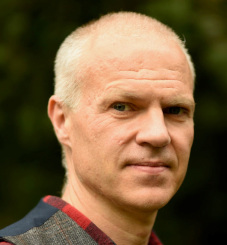
Mark Roulston
Mark led the development of the AGORA prediction market platform while at investment firm Winton Group, where he worked for a decade, and at Hivemind, a technology company spun-out from Winton in 2018. He has a PhD in planetary science from Caltech for a thesis on the predictability of El Niño and he continued research on climate predictability at Oxford and Pennsylvania State Universities before working at the UK Met Office, prior to joining Winton. At Winton he led the integration of weather and climate information into quantitative trading strategies. Mark is now a Senior Research Fellow at Lancaster University where he is Director of Operations for the CRUCIAL initiative — funded by the SCOR Foundation — which uses prediction markets to forecast climate risks.
Managing Climate-Related Catastrophe Risk at SCOR: Tools, Challenges, and Innovations
Symeon Koumoutsaris, Global Head of Cat Research & Development at SCOR
The (re)insurance industry is among the most financially exposed to climate variability and change. Sensible decisions require a deep understanding of emerging trends and their evolution. In response, the industry has invested in integrating outputs from climate models to anticipate when and where losses are most likely to occur, supporting more informed pricing of physical climate risks.
SCOR manages climate-related physical risks through a) carefully monitoring and managing our accumulated gross exposures to ensure that the company is not overly concentrated in certain locations, b) continuously developing and enhancing our catastrophe modelling tools and view of risk, c) targeted underwriting to manage the growing volatility of natural catastrophes under climate change, and d) partnerships with scientific institutions for the modeling of climate events.
This presentation highlights some of the ways that SCOR is using to assess climate-related risks, for example, scenario-based stress testing, counterfactual scenarios, and climate conditioned catastrophe models.
However, modelling remains challenging due to uncertainties in future emissions, policy shifts, complex climate processes, and data limitations. The CRUCIAL initiative can help reduce uncertainty by leveraging expert-driven prediction markets. The final section explores how probabilistic forecasts can be integrated into (re)insurance processes to strengthen climate risk assessment.

Symeon Koumoutsaris
Simos became the Global Head of Cat Research & Development at SCOR in April 2023. His expertise lies in atmospheric perils and climate change, and he oversees a team dedicated to researching, evaluating, and developing catastrophe models. Prior to joining SCOR, Simos spent over 8 years at Guy Carpenter in London and Zurich, where he led a team of experts focused on atmospheric and geophysical risks. Before that, he worked as a catastrophe model developer at Risk Management Solutions. Simos holds a PhD in atmospheric sciences from EPFL in Lausanne.
A market participant’s perspective
Kristian Strømmen, Oxford University AOPP Team
Andrew McRae, Oxford University AOPP Team
Ten teams are currently participating in CRUCIAL’s climate-related prediction markets. Most of these teams come from U.K. university climate research groups with one team from U.S. academia and one from a private sector weather and climate forecast provider.
In this presentation the team from the Atmospheric, Oceanic and Planetary Physics (AOPP) Department at Oxford University describe how they translate their expertise in climate science into trading strategies in CRUCIAL’s prediction markets.

Kristian Strømmen
Kristian obtained his PhD in pure mathematics from the University of Oxford. He then transitioned to climate science, working on climate model development. He is now a senior researcher at Oxford working on understanding mid-latitude weather, both in terms of predictability and in terms of the response to global warming. He has participated in numerous prediction markets on the AGORA platform.
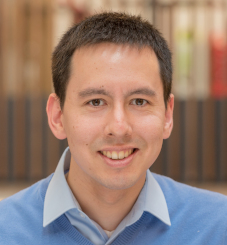
Andrew McRae
Andrew obtained his PhD from Imperial College London, with a focus on numerical methods for weather prediction. He then did postdoctoral research at the University of Bath and the University of Oxford, most recently working on machine learning models for postprocessing rainfall forecasts. He has taken part in numerous prediction markets on the AGORA platform since 2018.
Advancing climate solutions: The rôle of the UK National Climate Science Partnership
Michael Meredith, UK National Climate Science Partnership
Climate change is arguably the greatest challenge facing humanity, with increasing impacts on food security, water security, infrastructure, economies, finance and social stability worldwide. Knowledge is advanced concerning the causes of climate change and the need for mitigation and adaptation, but more is required that facilitates effective solutions across sectors. One issue is that the current scale of the response does not match the scale of the challenge, either temporally or in terms of magnitude. Within the UK, a new initiative has been created to help address this, with the formation of the UK National Climate Science Partnership (UKNCSP). This is drawing together the capability of seven leading institutes, each of which has a mandate for large-scale, long-term, cross-sector climate research, and which collectively host most of the UK’s research infrastructure relating to the production of climate evidence. This includes research stations around the world, research ships, aircraft, high-performance computing, and more than 1000 scientists and technical staff. The mission of UKNCSP is to unite and harness this capability, foster and enhance collaboration nationally and internationally, and drive solutions for a resilient, carbon-neutral world. This talk outlines the context, goals and modus operandi of UKNCSP.

Michael Meredith
Professor Michael Meredith is Joint Director of the UK National Climate Science Partnership (UKNCSP), a new initiative that is linking the climate science capability and activity of seven leading UK research institutes to develop and deliver climate solutions for government and stakeholders. His own research centres around ocean circulation and climate, which is conducted via his role at the British Antarctic Survey (BAS) in Cambridge, UK, and as Professorial Fellow in Oceanography at Murray Edwards College, University of Cambridge. As part of this research, Michael regularly conducts fieldwork in Antarctica, including participation in 19 expeditions and leadership of 5, most recently in winter 2025. Michael is a Fellow of the Royal Meteorological Society and the American Geophysical Union. He engages regularly with the media and policymakers, and has been contracted to the BBC as Scientific Consultant on several documentary series including “Blue Planet II” and “Frozen Planet II”. He was a Coordinating Lead Author for the IPCC Special Report on Oceans and Cryosphere in a Changing Climate. In 2018, Michael was awarded the Tinker-Muse Prize for Science and Policy in Antarctica, and the Challenger Medal. In 2020, he was awarded the Polar Medal by HM The Queen. In 2021, Michael was elected to serve as President of the Challenger Society for Marine Science, the UK’s pre-eminent learned body for research of the ocean.
