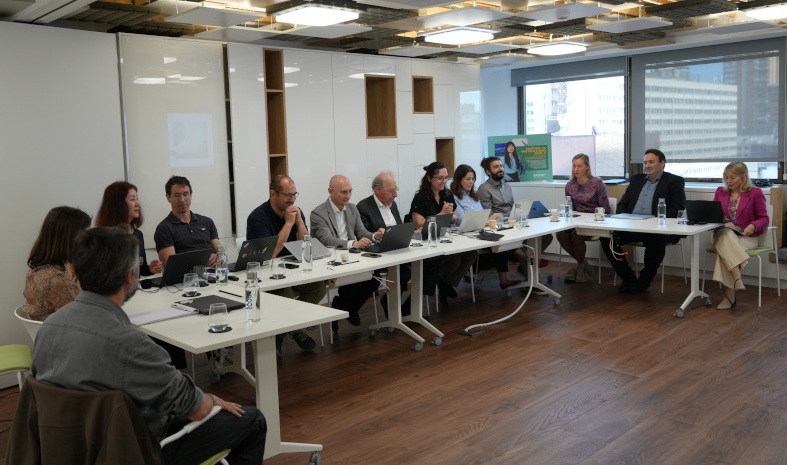
The fifth workshop of the SCOR Chair on Mortality Research took place on April 21–22 at SCOR’s Madrid office, marking the beginning of the final year of this three-year project. Eight invited speakers presented their ongoing research across three thematic areas:
1- Inclusion and fairness in insurance
2- Challenges for progress in human longevity
3- Harvesting Effects and impacts of the COVID-19 pandemic
4- Multimorbidity trends and healthy life expectancy
Inclusion and fairness in insurance and challenges for progress in human longevity
The speakers discussed the impact of the Right To Be Forgotten (RTBF) on access to life and health insurance for breast cancer survivors and insurers’ portfolio risk. RTBF allows people in remission from cancer to obtain insurance without disclosing their cancer history. The studies concluded that RTBF can improve fairness and inclusion in insurance. However, to avoid adverse selection, it should be applied to compulsory products.
Challenges for progress in human longevity
Decelerating gains in life expectancy in high-income countries have raised concerns about the future of human longevity. To enhance the understanding of these developments, the study examined subnational (450 regions) mortality trends in Western Europe in the period 1992-2019. Between 1992 and 2005, gains in life expectancy were both substantial and widespread. Laggard regions experienced the fastest improvements, yielding rapid regional convergence. Between 2005 and 2019, however, gains in these regions decelerated, while remaining remarkably stable in vanguard regions, suggesting that it remains possible to continue extending longevity. Monitoring mortality trends at a fine geographical level is crucial for revealing both the potential for, and challenges to, sustainable progress in human longevity.
Harvesting Effects and impacts of the COVID-19 pandemic
The study presented a novel approach for quantifying short- and mid-term harvesting effects resulting from two types of mortality shocks: heat waves and pandemics. The analysis focused on the pandemics of the Russian flu (1889–1894), Spanish flu (1918–1920), Asian flu (1957–1958), Hong Kong flu (1968–1970), and COVID-19 (2020–present), as well as on the heat waves of 1911, 2003, 2019, and 2022. The method identified both immediate and delayed mortality effects, accounting for the magnitude of the shock, the time elapsed since its occurrence, and the proportion and age profile of the affected population. The study concluded that there was strong evidence of harvesting due to heat waves, while almost no evidence of harvesting due to pandemics.
Multimorbidity trends and healthy life expectancy
With rising longevity, multimorbidity is an increasingly important challenge for healthcare systems. The first study examined the trends in the prevalence and incidence of multimorbidity across socioeconomic groups in Catalonia between 2010 and 2021. A strong socioeconomic gradient is observed, with lower-income individuals experiencing worse multimorbidity prevalence and incidence. Such a gradient is persistent and becomes more pronounced at the end of the study period. Across all age groups, individuals experiencing multimorbidity have a higher risk of dying than those who do not.
Using detailed Danish register data, the second study estimated the average number of years lived with and without specific diseases and multi-morbidities over time and across subpopulations defined by income. Among the general population at age 65, a good proportion of remaining years are spent without specific diseases. Those healthy at 65 spend one additional year in good health compared to the general population. Those with one chronic disease at 65 live as long as the healthy years of the general population while those with multimorbidity live less than half the years of the general population.
Presentations
|
Learn more about the Chair on Mortality Research on the SCOR Foundation Project page
